
When patients start researching dermal fillers, Radiesse pros and cons come up quickly and for good reason. Radiesse is a distinctive option in the filler landscape, working differently from hyaluronic acid fillers and offering a combination of immediate and longer-term benefits that appeals to many patients. But like any cosmetic procedure, it is not the right fit for everyone, and understanding both sides of the equation is essential before moving forward with treatment.
At Rubinstein Plastic Surgery Center in Montvale, NJ, the goal of every Radiesse consultation is to make sure patients have a clear picture of what the treatment can and cannot do, so that anyone who proceeds does so with accurate expectations and confidence in their decision.
What’s Worth Knowing Before You Decide
Radiesse is a calcium-based filler that both restores volume and stimulates the body’s own collagen production, a dual mechanism that sets it apart from most other fillers. Here are five key points to consider:
- Radiesse delivers immediate results and continues to improve skin quality over time by stimulating natural collagen production beneath the surface.
- It is one of the longer-lasting dermal fillers available, with results clinically proven to last a year or more in many patients.
- Radiesse is not appropriate for all areas of the face it is not used in the lips or for very fine, superficial lines.
- Common side effects are mild and temporary, including swelling, redness, and bruising at the injection site.
- The right candidacy for Radiesse depends on facial anatomy, skin quality, and aesthetic goals, all of which are evaluated during a consultation.
What Is Radiesse and How Does It Work?
Radiesse is an FDA-approved volumizing filler made from calcium hydroxylapatite microspheres suspended in a water-based gel. Calcium hydroxylapatite is a biocompatible material that occurs naturally in the body, which contributes to Radiesse’s strong safety profile and its ability to integrate smoothly into the surrounding tissue after injection.
When injected beneath the skin, Radiesse works in two ways. First, the gel immediately adds volume and structure to the treatment area, improving the appearance of wrinkles, folds, and areas affected by facial aging. Second, the calcium microspheres act as a scaffold that stimulates the body’s natural production of collagen in the weeks and months that follow. As the body gradually absorbs the microspheres, the new collagen that has formed continues to support and improve the skin’s appearance, extending results well beyond what the filler itself provides.
What Can Radiesse Improve?
Radiesse is a versatile filler well suited for areas of the face where structure, volume, and definition are the primary concerns. It is commonly used to address:
- Nasolabial folds and smile lines running from the nose to the corners of the mouth.
- Marionette lines and other moderate to deep wrinkles around the lower face.
- Volume loss in the cheeks and midface.
- Jawline definition and early jowling.
- Hand rejuvenation, where Radiesse restores volume to the backs of the hands to improve a hollowed or aged appearance.
The Pros of Radiesse Filler
For patients who are good candidates, Radiesse offers a meaningful set of advantages over other fillers and non-surgical options.
- Immediate results with progressive improvement: Radiesse provides visible volume and lift right after treatment, and results continue to develop over several months as collagen production increases. Patients see both an instant change and ongoing skin quality improvement.
- Longer-lasting than many other fillers: Results are clinically proven to last a year or more in many patients, and often longer in lower-movement areas like the cheeks. This makes Radiesse a practical option for patients who prefer fewer maintenance visits.
- Collagen stimulation beyond the filler itself: Because Radiesse encourages the body’s natural collagen production, the skin retains some structural improvement even as the product gradually metabolizes. This is a benefit that hyaluronic acid fillers do not offer in the same way.
- Provides definition and structure: Radiesse’s firmer consistency makes it particularly effective for contouring areas like the jawline and cheeks, where support and lift are the goal rather than soft volume alone.
- Minimal downtime: Most patients resume normal activities the same day. Common side effects like swelling, redness, and bruising at the injection site are temporary and generally resolve within a few days.
- FDA-approved to mix with lidocaine: Radiesse injections can be combined with lidocaine to reduce discomfort during the procedure, improving the overall treatment experience.
Real Radiesse Results
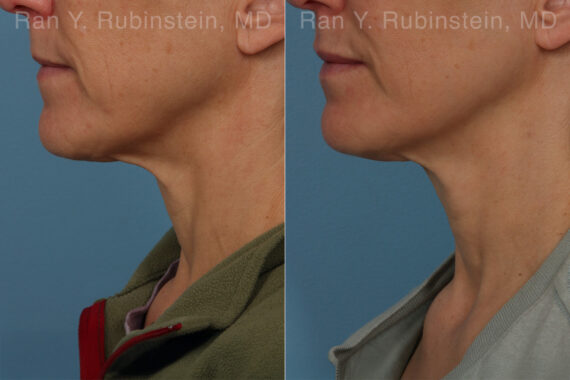
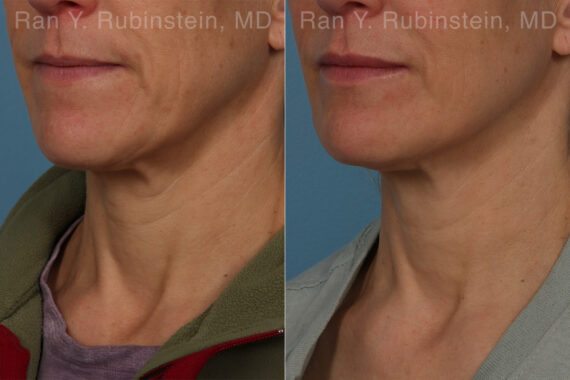
* All patients are unique and individual results may vary.
Radiesse Risks and Limitations to Consider
Radiesse is a strong option for many patients, but there are limitations and risks that factor into whether it is the right choice for a specific individual.
- Not appropriate for all facial areas: Radiesse is not used in the lips, and it is not suitable for very fine or superficial lines that call for a softer, more delicate filler. Using a filler with the wrong consistency for a given area can produce unnatural-looking results.
- Does not address significant skin laxity: Radiesse restores volume and stimulates collagen, but it cannot lift or tighten loose, sagging skin. Patients with more advanced skin laxity may find that filler treatment alone does not fully meet their goals.

- Cannot be dissolved: Unlike hyaluronic acid fillers, Radiesse cannot be reversed with an enzyme if a patient is unhappy with their results. This makes precise technique and proper patient selection especially important.
- Common side effects: Swelling, bruising, redness, and discomfort at the injection site are the most frequently reported side effects following Radiesse injections. These effects are typically mild and temporary.
- Rare complications: While uncommon, more serious complications can occur, including nodule formation or uneven results if the product is not placed correctly. Choosing an experienced injector significantly reduces these risks.
Who Is a Good Candidate for Radiesse?
Patients who tend to do well with Radiesse are those dealing with moderate to significant volume loss, deeper wrinkles and folds, or loss of definition along the jawline and cheeks. Good skin elasticity with minimal laxity supports better outcomes, and patients who prefer longer-lasting results with fewer maintenance appointments often find Radiesse a practical fit.
When Radiesse may not be the best option, other approaches deserve consideration. Patients with significant skin sagging or laxity may be better served by surgical options such as a facelift or neck lift, which address both volume and tissue positioning in ways that fillers cannot. For delicate areas like the lips or fine perioral lines, a softer hyaluronic acid filler is more appropriate. And for patients who are new to fillers and want flexibility, including the ability to dissolve the product if needed, starting with a reversible option may be a more comfortable first step. A thorough consultation helps identify the right path based on individual anatomy and goals.
Book Your Personalized Consultation
Meet with Dr. Rubinstein to discuss your goals and receive a customized plan.
What to Expect at Your Initial Consultation in New Jersey
The outcome of any Radiesse treatment depends heavily on who performs it. Because Radiesse has a firmer consistency than many other fillers and cannot be dissolved after placement, precise injection technique is critical. Proper depth, volume, and placement determine whether results look natural and refined, or overdone and uneven.
At Rubinstein Plastic Surgery Center, Radiesse injections are performed under the guidance of Dr. Ran Rubinstein, a double board-certified plastic surgeon. Performed alongside skilled injectors, treatments are planned with careful attention to each patient’s facial anatomy, skin quality, and aesthetic goals. Patients throughout Montvale, NJ, trust this team for results that enhance their appearance while maintaining natural movement and proportion.
If you are considering Radiesse and want to determine whether it is the right fit for your concerns, the best next step is a personalized consultation. Contact Rubinstein Plastic Surgery Center to schedule your appointment today.
Frequently Asked Questions About Radiesse Treatment