

When to start dermal fillers is one of the most common considerations patients have before booking a consultation. The honest answer is that there isn’t a single right age. What matters more is where you are in the aging process, what you’re hoping to achieve, and whether your goals call for prevention, enhancement, or restoration. Patients in their 20s, 30s, 40s, and beyond can all be good candidates for dermal filler injections, though the approach looks different at each stage.
At Rubinstein Plastic Surgery Center’s medical spa in Montvale, NJ, Dr. Ran Rubinstein and Physician Associate Stephanie Kramer, MPAS, PA-C, work with patients across a wide range of ages to develop personalized treatment plans that reflect each person’s facial anatomy and aesthetic goals.
What Patients Should Know About Dermal Fillers and Age
- There is no single ideal age to start dermal fillers; the right time depends on your individual goals and facial anatomy.
- Patients in their 20s often use fillers for enhancement and early prevention, while those in their 30s use them for maintenance and correction.
- In your 40s and beyond, fillers can restore lost facial volume and provide a subtle lifting effect.
- Many patients combine dermal fillers with other injectables and skin treatments like Botox and laser treatments as part of a broader facial rejuvenation plan.
- A consultation with an experienced plastic surgeon or injector is the first step in determining whether fillers are right for you today.
There’s No “Perfect” Age for Dermal Fillers
Age is one factor, but it’s far from the only one. Two patients of the same age can have very different needs based on their facial structure, skin quality, lifestyle, and personal goals. Someone in their late 20s with naturally hollow under-eyes may benefit from fillers long before a peer who has maintained strong facial volume into their 40s.
As Dr. Rubinstein notes, the conversation around aesthetic treatments has shifted significantly in recent years. “We’re seeing more and more patients in their 20s and 30s coming in for what’s called prejuvenation: preventative treatments,” he explains. That includes everything from the right cosmeceuticals and skin treatments to conservative Botox to prevent wrinkles before they form. Dermal fillers fit naturally into this approach when the goal is enhancement or early prevention rather than correction.
The question isn’t really whether you’re old enough or young enough for fillers. It’s whether fillers are the right tool for what you want to accomplish, and whether your anatomy and skin quality make you a good candidate for dermal filler injections at this point in time.
Fillers in Your 20s: Enhancement and Prevention
Patients in their 20s are increasingly choosing dermal fillers, and the reasons have less to do with signs of aging and more to do with enhancement and early prevention. This age group tends to be interested in creating better versions of themselves rather than reversing changes that haven’t happened yet.
Common goals for patients in this age range include fuller, more defined lips with lip fillers, more refined nose contours with liquid rhinoplasty, and improved chin definition with chin fillers. Some patients in their late 20s begin to notice the first subtle changes in facial volume, such as slightly sunken cheeks or under-eyes that make them look tired, and want to address these early before they become more pronounced.

While not a filler, Botox is also popular in this group as a preventative measure. Rather than waiting for lines to form, younger patients use conservative Botox to slow the development of wrinkles caused by repeated facial muscle movement. When used together, Botox or Juvederm treatments in your 20s can establish a strong foundation for long-term facial aging management. The key at this stage is subtlety. Overdone is out, and the most skilled injectors focus on enhancing natural features rather than altering them.
Fillers in Your 30s: Maintenance and Early Correction
The 30s tend to be when patients first notice real changes in their face. Collagen production begins to slow, smile lines become more visible at rest, and areas like the cheeks and under-eyes may start to show mild volume loss. For many patients, this is the right time to begin a more intentional approach to dermal fillers.
At this stage, hyaluronic acid fillers like Juvederm and Restylane are commonly used to smooth lines and wrinkles, restore subtle facial volume in the cheeks and midface, and maintain the results patients started in their 20s. Temple fillers become relevant here too, as the temples are one of the first areas to show early volume loss, often contributing to a slightly hollowed or tired appearance that patients can’t quite pinpoint.
The goal in your 30s is maintenance and correction of early changes, not dramatic transformation. Patients in this group often benefit from a combination of dermal fillers and Botox to address both dynamic wrinkles and volume concerns together. When properly placed, the results look natural and refreshed rather than treated.
Book Your Personalized Consultation
Meet with Dr. Rubinstein to discuss your goals and receive a customized plan.
Fillers in Your 40s and Beyond: Restore and Lift
In your 40s and 50s, facial aging becomes more multidimensional. Volume loss accelerates in the cheeks, temples, jawline, and chin. Deep wrinkles become more prominent. Ligaments that support facial structure begin to loosen, causing the face to sag in ways that volume loss alone doesn’t explain.
This is where Dr. Rubinstein’s approach to the liquid facelift becomes particularly relevant. Rather than simply filling in lines and wrinkles, his technique uses deep plane facelift concepts to strategically place filler along the facial ligaments for a lifting rather than filling effect. “When we lose volume in our 40s and 50s, we start to get sag of the face,” Dr. Rubinstein explains. “By restoring that volume, we can have a lifting effect.”
What Makes the Liquid Facelift Different
What makes this approach different is where the filler goes. “We are placing filler in the outer part, along the line of ligaments,” he notes, “which has a lifting effect just like I’m doing in my deep plane facelifts.” This avoids the overfilled appearance that can result from placing too much product in the central areas of the face, which tend to move and can look unnatural when heavy.
For patients in this age range, the goal is restoration and lift. Fillers like Juvederm Voluma, Restylane Lyft, and biostimulators such as Sculptra and Radiesse are commonly used to rebuild cheekbones, define the jawline, restore facial volume, and support the skin’s overall structure. Hyaluronic acid fillers provide results that last one to two years, while biostimulators can last two years or more and also produce some tightening of the skin over time.
Patients in their 40s and 50s who are considering surgery in the future are often good candidates for a liquid facelift in the meantime. As Dr. Rubinstein explains, if a patient is considering a facelift in the next year or two, “I don’t see any reason why they can’t have a liquid facelift, especially the way that we do it, where we’re using less product and placing it mainly in the outer part of the face.”
Dermal Fillers Results
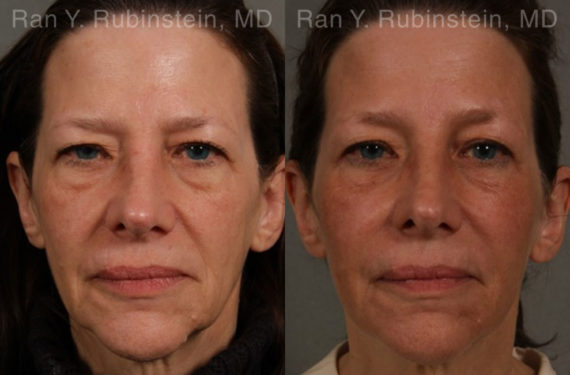
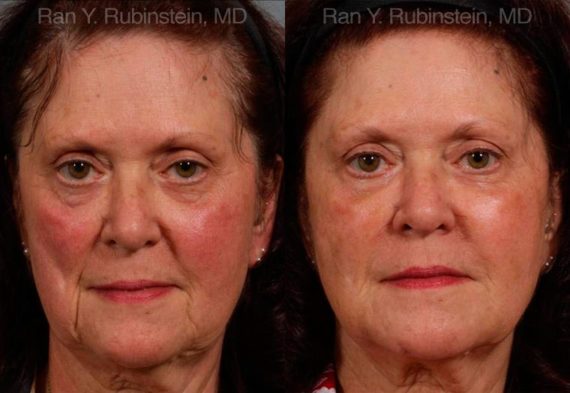
* All patients are unique and individual results may vary.
What May Determine When to Start Fillers
Age provides a general framework, but several other factors influence whether the right time for dermal fillers is now.
Facial Structure
Some patients are born with facial features like naturally hollow under-eyes, less-defined cheekbones, or a recessed chin that they want to improve regardless of age. For these patients, fillers serve an enhancement purpose rather than an anti-aging one, and starting at a young age is entirely appropriate.
Skin Quality and Lifestyle
Sun exposure, smoking, stress, and diet all affect how quickly the skin ages and how well it responds to treatment. Patients with significant sun damage or skin laxity may benefit from combining dermal fillers with laser treatments or other skin care interventions for more comprehensive results.
Personal Goals
Prevention, enhancement, and restoration are all valid reasons to pursue fillers, and they call for different approaches. The most important thing is having a clear sense of what you want and working with a provider who can honestly evaluate whether fillers are the best tool for those goals right now or whether other treatments might serve you better.
The Value of an Experienced Injector
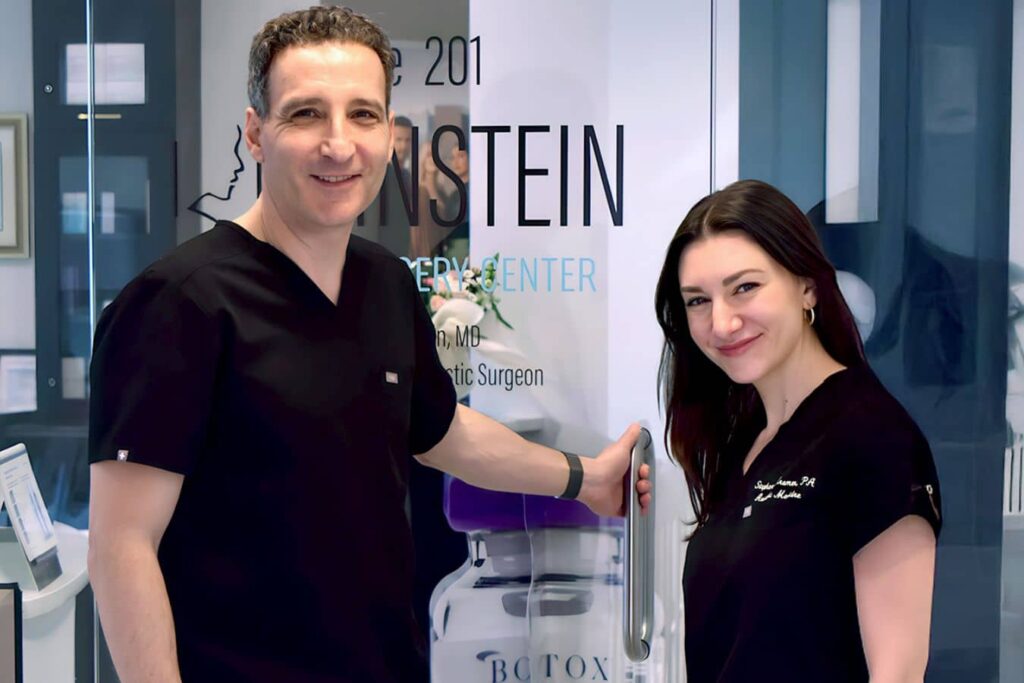
Fillers are not a one-size-fits-all treatment, and results vary significantly based on who is performing the injections. At Rubinstein Plastic Surgery Center, Dr. Rubinstein brings his surgical background and deep understanding of facial anatomy to every injectable treatment plan. Stephanie Kramer, MPAS, PA-C, Clinical Lead and Physician Associate, also performs dermal filler injections and brings significant expertise in personalized aesthetic planning to her patients.
Customized treatments performed by skilled, experienced injectors consistently produce better results than standardized approaches, and they reduce the risk of the overfilled, unnatural look that makes many patients hesitant about fillers in the first place.
Schedule a Consultation at Rubi Med Spa in Montvale, NJ
Whether you’re in your late 20s thinking about your first filler appointment or in your 50s considering a more comprehensive facial rejuvenation plan, the first step is a consultation. At Rubi Med Spa at Rubinstein Plastic Surgery Center, Dr. Rubinstein and Stephanie Kramer work with each patient to evaluate facial anatomy, discuss goals, and recommend the most appropriate combination of treatments for natural, lasting results.
Patients throughout Bergen County and northern New Jersey visit the practice for expert injectable treatments. Contact the office today to schedule your consultation in Montvale, NJ.
Frequently Asked Questions About Dermal Fillers
About the Author
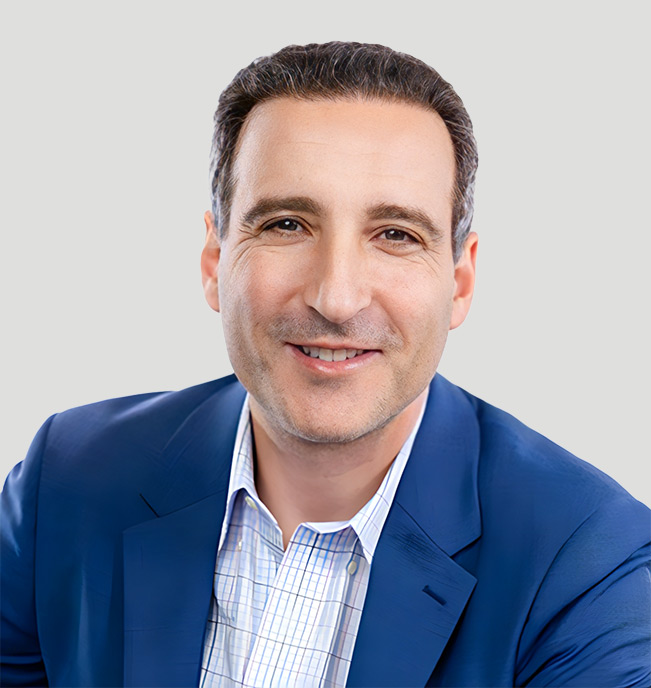
Ran Y. Rubinstein, MD is a double board-certified facial plastic surgeon at Rubinstein Plastic Surgery Center in Montvale, NJ, serving patients throughout Bergen County and northern New Jersey. He is certified by the American Board of Facial Plastic and Reconstructive Surgery and the American Board of Otolaryngology–Head and Neck Surgery, with more than two decades of experience in facial plastic surgery and advanced injectable treatments.
Dr. Rubinstein is widely recognized for his expertise in dermal fillers, liquid facelifts, and non-surgical facial rejuvenation. His injectable technique is informed by his deep plane facelift surgical background, allowing him to approach volume restoration and facial lifting with a level of anatomical precision that distinguishes his results.
His credentials and contributions to the field include:
- Double board-certified by the American Board of Facial Plastic and Reconstructive Surgery and the American Board of Otolaryngology–Head and Neck Surgery
- National education faculty member for Allergan, the maker of Botox and Juvederm
- National education faculty member for Galderma, the maker of Restylane and Sculptra
- One of the most sought-after injectable and laser trainers in the Northeast
- Active member of the American Society for Laser Medicine and Surgery and the American Academy of Facial Plastic and Reconstructive Surgery
- Medical director of Rubinstein Plastic Surgery Center and Rubinstein Aesthetic Training Specialists in Montvale, NJ