Home » Procedures » Fractional CO2 Laser
Fractional CO2 Laser in Montvale, NJ
When patients ask which single treatment can do the most for aging, sun-damaged facial skin, fractional CO2 laser resurfacing is often the answer. Rubinstein Plastic Surgery Center in Montvale, NJ performs this treatment with the Cynosure Lutronic eCO2 3D, a next-generation platform capable of everything from a light, low-downtime laser facial to deep resurfacing that approaches surgical results.
Because this is a dedicated facial plastic surgery practice, every fractional CO2 treatment here is planned with a surgeon’s understanding of facial skin, its healing behavior, and how resurfacing fits alongside other rejuvenation options. Dr. Ran Rubinstein is a double board-certified facial plastic surgeon who also directs Rubinstein Aesthetic Training Specialists, where he teaches aesthetic providers from around the country. That perspective shapes how conservatively or aggressively your skin is treated.

How Fractional CO2 Resurfacing Works
Carbon dioxide lasers improve skin by removing what is damaged and prompting the body to rebuild what is healthy. The laser vaporizes tissue at a depth the provider selects, and as healing progresses, the treated areas are replaced with new skin while collagen production ramps up underneath.
The fractional approach makes this process far more tolerable than the CO2 resurfacing of decades past. Rather than treating every square millimeter of the surface, the laser creates a dense pattern of microscopic treatment columns surrounded by intact skin. That surrounding healthy tissue speeds healing dramatically, shortens recovery, and reduces the likelihood of adverse reactions while preserving the depth of correction CO2 lasers are known for.
Inside the eCO2 3D Platform
Cynosure Lutronic engineered the eCO2 3D to remove the traditional compromises of CO2 resurfacing: long recovery, elevated risk, and rigid treatment settings. Three features stand out.
A 40-Watt Engine with 33% More Power
More power translates directly into better resurfacing. The eCO2 3D’s 40-watt output, a 33% increase, produces cleaner, deeper ablation zones and shortens session times, which matters when treating an entire face at meaningful depth.
Controlled Chaos Scanning
Rather than firing in a predictable grid, the eCO2 3D places its laser pulses in a patented randomized sequence called Controlled Chaos technology. Spacing consecutive pulses apart keeps heat from building up in any single area of skin, and the payoff is meaningful: fewer hot spots, greater comfort, better safety, and shorter recovery without sacrificing results.
Interchangeable Tips and Dual Delivery Modes
Three microbeam tips, measuring 120, 300, and 500 microns, let us match the beam to the problem, whether that is refining surface texture or reaching deep, etched lines. Two delivery modes add another layer of control. Static mode drives energy deep for wrinkle correction and tightening, while Dynamic mode sweeps quickly and gently across the full face to even out tone and texture in roughly half the time.



THE PROCEDURE
A Treatment You Can Dial Up or Down
What makes the eCO2 3D genuinely different is that a single device can be calibrated to two very different patient priorities: maximum correction or minimum downtime. At your consultation, we will map your skin concerns against your schedule and tolerance for recovery, then build the treatment plan around that conversation. Here is how the two levels compare.
Aggressive Resurfacing for Surgical-Grade Correction
At its most powerful settings, the eCO2 3D delivers the kind of transformation once reserved for surgery: substantial improvement in deep wrinkles, etched-in lines, acne scarring, heavy sun damage, and crepey, lax skin. A single session is enough for most patients. comfortable returning to work.
Recovery is the tradeoff, and we are upfront about it. Plan on up to a week of downtime. The skin swells during the first several days, sheds its damaged outer layer through peeling and flaking, and remains pink as the fresh surface matures. Pinpoint bleeding can occur right after treatment at these settings and typically clears within two days. By day five to seven, most patients feel comfortable returning to work.
Anesthesia is not required for this procedure, though a small amount of oral relaxation medication is often prescribed. For patient comfort, topical and injectable anesthesia are also used. Your preparation will follow the same proven protocol our practice developed for Fraxel Re:pair resurfacing, including a pre-treatment skincare plan, any preventive medications you may need, and firm sun avoidance in the weeks surrounding your session.
Maintaining the result afterward does not mean repeating the full treatment. Lighter options do that job well, whether a periodic Fractional CO2 Laser Facial or a nonablative treatment such as microneedling with topical growth factors, RF microneedling, or Fraxel Dual.
The Fractional CO2 Laser Facial
The same laser at gentle settings becomes the Fractional CO2 Laser Facial, our spa-level resurfacing option for patients who want visible skin improvement while staying on schedule with life.
Expect a very comfortable session and very little downtime afterward: typically just one to three days of mild redness. Because the energy is delivered more conservatively, results accumulate across a series rather than arriving all at once. Three sessions spaced four to eight weeks apart is the standard plan. Patients use the Laser Facial as a first step into resurfacing, as upkeep after a deep treatment, and as a skin refresher ahead of weddings, reunions, and other big moments.
Super awesome each time I’ve visited the office, starting from their inaugural day! Great service and the doctors are very friendly and approachable. Technology is top of the line, and they also provided me with quotes and options for flexible payments. Fantastic staff.




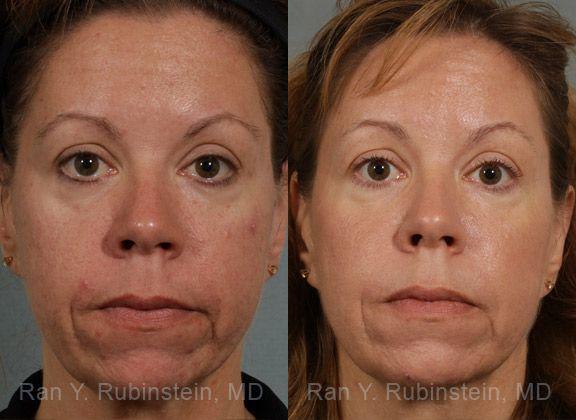
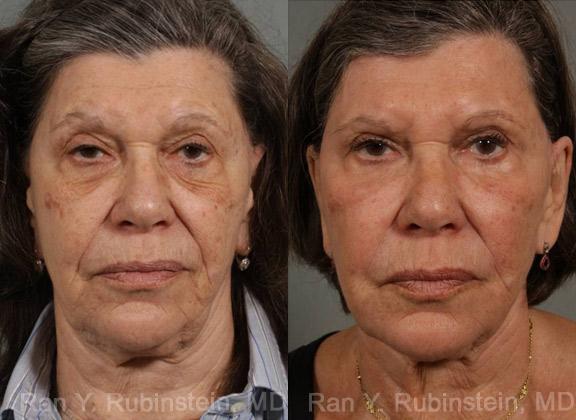
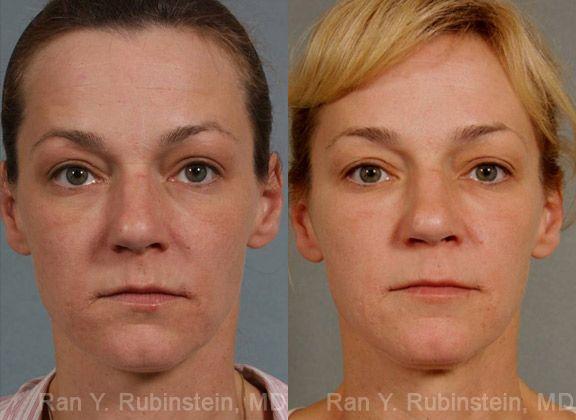
The procedure
Who Is a Good Candidate?
Fractional CO2 resurfacing suits healthy adults bothered by wrinkles and fine lines, scarring, sun damage, rough or dull texture, enlarged pores, or early skin laxity on the face. The device carries FDA clearance for treating wrinkles, rhytides, furrows, fine lines, textural irregularities, and pigmented lesions. Candidacy also depends on skin type, recent sun exposure, and medical history, all of which we review carefully at your consultation. If a different technology would serve your goals better, we will tell you so and explain why.
Healing, Sun Protection, and Long-Term Results
However light or deep your treatment, the weeks that follow have one non-negotiable rule: keep the sun off your healing skin. New skin is especially vulnerable to pigment changes, so strict sun avoidance followed by consistent daily SPF protects both your safety and your outcome.
Improvement unfolds in stages. Smoother, brighter skin appears once the surface heals, and the collagen response continues working for months, with benefits that can extend well beyond six months after treatment. Deep resurfacing can produce a dramatic change from one session, while the Laser Facial series builds its result gradually. Adverse reactions such as prolonged redness, infection, scarring, or pigment change are possible with any resurfacing laser but are uncommon with careful patient selection and diligent aftercare.
Start Your Journey to Success, Don’t Wait More!
Schedule a consultation with Dr. Rubinstein
Preparing for Fractional CO2 Resurfacing
Preparation begins weeks before the laser is turned on. Sun exposure and tanning must be avoided in the lead-up to treatment, since recently tanned skin is more prone to pigment problems afterward. Depending on your treatment depth, we may start you on a conditioning skincare regimen or prescribe preventive medications, including an antiviral if you have a history of cold sores. Following these instructions closely is one of the strongest predictors of a smooth recovery.
Your Appointment, Step by Step
Treatment begins with thorough cleansing and application of topical numbing cream, which is given time to fully take effect. For patients undergoing deeper resurfacing, we add injectable numbing for comfort. Full-face treatment generally runs thirty to forty minutes, during which you will feel progressive warmth across the skin. A Laser Facial session is shorter and gentler. Before you leave, you will receive aftercare instructions matched to your treatment depth.
Cost of Fractional CO2 Laser in Montvale, NJ
Why Have This Treatment at a Facial Plastic Surgery Center?
Resurfacing outcomes reflect the judgment behind the laser settings as much as the laser itself. At Rubinstein Plastic Surgery Center, treatment plans are directed by a surgeon certified by the American Board of Facial Plastic and Reconstructive Surgery (ABFPRS) with over two decades of experience in facial plastic surgery. If your goals would be better served by combining resurfacing with injectables or facial surgery, those options are available under one roof.
Serving Montvale and Bergen County
Our office at 160 Summit Ave, Suite 201 in Montvale welcomes patients from Ridgewood, Paramus, Closter, Tenafly, Westwood, Hillsdale, Park Ridge, and communities throughout Bergen County and northern New Jersey seeking fractional CO2 laser resurfacing.
Fractional CO2 Laser FAQs
What is the difference between deep resurfacing and the Fractional CO2 Laser Facial?
Both use the same eCO2 3D laser. Deep resurfacing uses aggressive settings to deliver dramatic correction in a single session with up to a week of downtime, while the Laser Facial uses lighter settings across three sessions spaced four to eight weeks apart, with only one to three days of mild redness after each.
Will I need anesthesia?
No, anesthesia is not required. For deeper treatments, a small amount of oral relaxation medication may be recommended. Topical and injectable anesthesia can be used for patient comfort, and the Laser Facial is extremely comfortable on its own.
When can I go back to work?
Following deep resurfacing, most patients are back at work within five to seven days. After a Laser Facial, mild redness lasting one to three days is typically the only interruption.
How do I maintain my results?
After deep resurfacing, results are maintained with lighter treatments rather than repeat sessions. Options include the Fractional CO2 Laser Facial, Fraxel Dual, RF microneedling, and microneedling with topical growth factors, along with daily sun protection.
Does fractional CO2 work on acne scars?
Yes. Ablative fractional resurfacing is one of the most effective tools available for softening depressed acne scars, and treatment depth can be tailored to the severity of the scarring.
How do I schedule a consultation?
Call or text our Montvale office at (201) 391-1135 or submit an appointment request through our website.